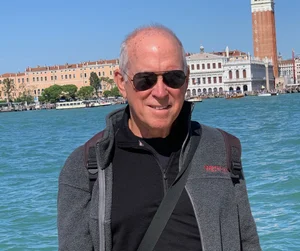
The Site Recording Studio Years - Duane Aslaksen
-
For twenty-five years, I helped run a recording studio hidden in the countryside outside San Rafael. Musicians came from New York, Los Angeles, England, Japan, and all over the United States to record there. Some were just getting started. Others were already famous. Along the way I met artists I had listened to for years, watched recording technology evolve from analog to digital, and witnessed the moment the music business changed forever.
-
Music has been part of my life for as long as I can remember.
When I moved from Ohio to California in the early 1970s, I naturally gravitated toward musicians. I played guitar and spent much of my time connecting with people who were performing, writing songs, and building bands. Whether I was in Los Angeles, Berkeley, Marin County, or later Sonoma, music remained a constant thread.
Like many musicians, I spent years balancing music with whatever jobs paid the bills. I worked in a music store, did painting and construction work, and held a few other odd jobs. But music was always what interested me most.
In the late 1970s, a musician friend and I decided to create something bigger.
We wanted to build a recording studio.
The studio eventually became known as The Site Recording Studio, located in the countryside outside San Rafael. The property was owned by my friend’s family, who helped finance the project and make it possible.
Our idea was inspired by a studio in Colorado called Caribou Ranch. Rather than simply providing a room where artists could record, we wanted to create a place where musicians could live, work, and focus entirely on their music.
The Site included recording facilities, guest rooms, living areas, and a kitchen. Artists could stay for days or weeks at a time while working on their projects. They could rehearse, write, record, and relax without constantly moving between locations.
At the time, it was a very attractive model.
Record companies were willing to support that kind of creative environment. Recording budgets were often substantial, and artists were encouraged to spend time developing their work.
For the next twenty-five years, that studio became my professional life.
Artists arrived from everywhere.
Some came from Los Angeles. Others came from New York, England, Japan, and elsewhere around the world. Some were established performers. Others were recording their first serious projects.
Much of our business came through producers.
The recording world was surprisingly small. Producers talked to each other. Engineers talked to each other. Studios developed reputations. Word spread about places where artists could do good work, and eventually The Site became one of those places.
One of the unexpected rewards was meeting musicians I had admired for years.
Instead of me traveling to concerts or studios to see them, they came to us.
Over the years we worked with artists including Keith Richards, Linda Ronstadt, Dolly Parton, Stanley Clarke, the Red Hot Chili Peppers, and many others. Some projects were large, some were small, but each recording session brought a different group of creative people through the doors.
The work itself was constantly changing.
Recording technology never stood still.
Every year there seemed to be new equipment, new techniques, new ways of shaping sound, and new expectations from artists and producers. Running a studio meant continuously learning and continuously investing in equipment.
You could never assume that what worked last year would be enough next year.
Then came the biggest change of all.
Digital recording transformed the industry.
Like everyone else, we adapted. We purchased digital systems and learned the new technology. In many ways digital recording improved the technical side of the business.
But the real disruption wasn’t the technology itself.
It was what happened next.
When Napster and online file sharing appeared, the recording industry changed almost overnight. Record companies became much more cautious. The large recording budgets that had supported studios like ours began disappearing.
The economics no longer worked the same way.
Artists still wanted to record music, but fewer projects could support the kind of residential studio environment we had built. The extra value we provided—housing, creative space, and extended recording time—became much harder to monetize.
The business gradually became more difficult.
We continued operating as long as we could, but by around 2005 it was clear that the era that had supported studios like ours was ending.
After twenty-five years, The Site closed.
Looking back, I don’t regret a minute of it.
It was demanding work. Technology changed constantly. Equipment was expensive. Success was never guaranteed. We were always trying to stay one step ahead.
But it allowed me to spend my career surrounded by music and creative people.
I met artists I had admired since I was young. I watched great musicians create recordings from the first rough idea to the finished album. I saw an industry evolve, prosper, and eventually reinvent itself.
Not many people get to spend twenty-five years doing something they genuinely love.
I was fortunate enough to be one of them.
-
The recording industry of the 1980s and 1990s operated very differently from today’s music business.
Residential recording studios offered artists the opportunity to live and work in a focused creative environment.
Success in the recording industry depended on relationships, reputation, and word-of-mouth referrals.
The shift from analog to digital recording was significant, but Napster and online file sharing had an even larger impact on the economics of the industry.
Long careers often evolve through adaptation rather than careful planning.
-
This story was created from a recorded conversation between Duane Aslaksen and Don Lundgren as part of Sonoma Stories. The story has been edited for clarity and length while preserving Duane’s experiences and observations.