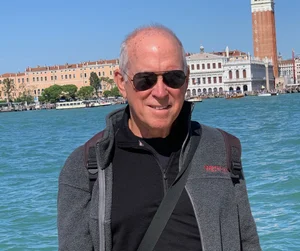
Returning Something Home - Bill Blosser
-
Bill Blosser’s family has deep roots in Northern California, stretching back to the 1850s in the Willits area. For generations, his family preserved a collection of Native American mortar and pestles that had been taken from the land after the Pomo people were displaced. More than a century later, Bill helped return those artifacts to the Pomo tribe, turning a family heirloom into an act of reconciliation.
-
My family’s roots in Northern California go back to the 1850s. Long before I was born, members of the Blosser family settled in the Willits area of Mendocino County. The family remained there for generations. There is still a Blosser Elementary School in Willits, and our family cemetery remains there as well. My parents are buried there, and one day I will be too.
Although I was born and raised in Oakland, Willits was always part of my identity. Growing up, my family regularly made the drive north to visit relatives. Those trips connected me to a place that had been part of our family’s story for more than a century.
As I got older, however, I began to think more carefully about what that history actually meant.
Like many early settlers in California, my ancestors arrived at a time when Native people were being displaced from their traditional lands. The Pomo people had lived throughout the region for generations before settlers arrived. As the United States expanded westward, Native communities were forced from their homes and onto reservations.
My family’s story was connected to that larger history.
Among the possessions passed down through several generations of my family were a number of stone mortar and pestles that had once belonged to Native people in the area. According to family history, they had been collected by my ancestors after the Pomo were removed from the land. The artifacts remained in our family for more than a hundred years.
As a child, I never thought much about them. They were simply objects that moved from one family member’s home to another. My grandparents had them. My parents had them. Eventually my sister became their caretaker.
Then one day she raised a simple question.
Should we give them back?
The more we talked about it, the more obvious the answer became.
Those artifacts did not really belong to us. They were part of someone else’s history and culture. Our family had preserved them for generations, but preserving them was not the same thing as owning them.
So I volunteered to return them.
I drove north to the Pomo tribal headquarters near Ukiah, carrying the mortar and pestles that had been in my family’s possession for more than a century. The tribal representatives welcomed the opportunity to receive them and place them in their museum, where they could be preserved as part of their own story rather than ours.
It was a small act. Returning a few artifacts does not change history, nor does it erase what happened in the nineteenth century. But standing there and handing them over, I felt that we were doing something important.
In a modest way, it was an opportunity to make amends.
Families inherit many things from previous generations. Some are easy to celebrate. Others require us to think more carefully about where we came from and what responsibilities come with that inheritance.
When I think about Willits today, I think about family, continuity, and belonging. But I also think about stewardship—about recognizing that history is rarely simple and that sometimes the right thing to do is return something to the people who should have had it all along.
The mortar and pestles now belong where they always belonged.
And that feels right.
-
Family history can be both a source of pride and reflection.
Bill’s family has been part of Northern California for more than 170 years. That long history includes accomplishments worth celebrating, but also responsibilities that come with understanding the past.
Objects carry stories.
The mortar and pestles were more than artifacts. They connected multiple generations of one family while also preserving a link to the people who originally created and used them.
Preservation is not the same as ownership.
For generations the artifacts were carefully protected by Bill’s family. Eventually the family concluded that preserving them did not give them a claim to keep them.
Small acts can acknowledge larger histories.
Returning a few artifacts could not change the events of the nineteenth century, but it allowed one family to recognize that history and take a step toward making amends.
Inheritance includes responsibility.
What we receive from previous generations is not limited to land, possessions, or family stories. We also inherit decisions, consequences, and opportunities to act thoughtfully in the present.
-
This story was created from a recorded conversation with Bill Blosser. Although it is separate from his Sonoma Story, it reflects an important part of his family’s history in Northern California and a personal experience that shaped his understanding of stewardship, responsibility, and belonging.