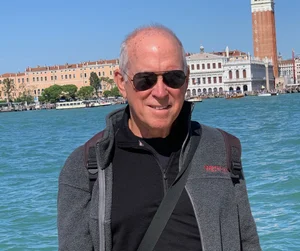
Helping People - Patrick Garcia
Patrick’s Sonoma Journey — Helping People
This is the third of three stories about Patrick’s relationship with Sonoma Valley.
🟩 Discovering a Family Connection to Sonoma — Chapter 1
Patrick comes to Sonoma County for education and discovers that his ancestry connects him to General Vallejo and California’s early history.
🟥 Finding a Place for Humanistic and Bicultural Psychology — Chapter 2
Patrick finds a lasting home where his education, cultural heritage, faith and commitment to helping others can come together.
🟦 Helping People — Chapter 3 (You are reading this story.)
-
Patrick contributed to Sonoma County as a mentor, professor, psychologist, church organizer, state parks leader and honorary mayor. His work opened opportunities for Hispanic children and families while helping residents and visitors understand the community’s history.
-
I came to Sonoma County because of education, but I also came here to help children and families.
My cousin Eugene Villalobos was the general manager for César Chávez, who was my good friend. Eugene was the professional person for the group. He knew how to manage organizations and take care of the business side of the movement.
Around 1969, Eugene spoke with me about what was happening and what he wanted me to become involved in. That connection helped direct my attention toward the needs of farmworkers and their children.
After I came to Sonoma County, I created the first mentoring program of its kind in the county. I had 400 children of farmworkers who needed help, so I recruited 400 people to serve as their mentors.
It was a very big undertaking. Each child needed an adult who could provide guidance and support. I initially operated the program from my small apartment.
The vice president of Sonoma State University learned what I was doing. She contacted me and said she did not want me running such a large program from my home. She gave me a free office and telephone at the university.
A couple of weeks later, she called again and told me she had done something else. She said I was now the first Hispanic professor at Sonoma State University.
That became an important part of my history and the university’s history. It gave me an opportunity to continue my work from within the university and to represent the Hispanic community there.
My career was always focused on the humanistic needs of people. I worked in the state courts for many years as a family and child-custody mediator. I also counseled teenagers.
Through that work, I helped thousands of people. Families experiencing difficult moments needed someone who could listen, understand their circumstances and help them find a way forward.
My bilingual and bicultural background was important. I understood that people’s language and cultural experiences shape how they see the world. I wanted families from different backgrounds to know that they were being heard and understood.
My community service also included Sonoma’s state parks. I served as a volunteer director in the state parks for sixteen years.
My connection to General Vallejo was important to that work. Visitors came to see me and ask about the history of Sonoma and California. I enjoyed talking with them about General Vallejo, the historic buildings and the development of the city.
Another guide and I led people on walks through the area. We taught them about the trees, the scenery, the historic locations and the buildings. We helped visitors understand the history they were seeing around them.
My work at St. Francis Solano Church was another important contribution. In 1976, I created the church’s first Hispanic Mass and association. The Mass grew to become a major part of the parish.
I was also named an honorary mayor of Sonoma. After that, people throughout the area began calling me “Mr. Mayor.”
They still greet me that way. I enjoy it because it represents my relationship with the people of Sonoma. It reminds me that they know me and remember the work I have done.
When you reach my age, you realize how much there is to learn. I have had to learn about many languages, cultures, professions and kinds of people. That is why I became the psychologist I am.
I have lived here for more than five decades, and I have helped thousands of people. I have worked with children, teenagers, parents, students, farmworker families, church members, park visitors and people going through the courts.
All of those experiences are connected. Whether I was creating a mentoring program, teaching at the university, counseling a family or explaining Sonoma’s history, I was trying to understand what people needed and find a way to help.
That work is part of my heart. It is what helps me feel strong as a human being.
-
Mentoring on an Unprecedented Scale
Patrick recruited 400 mentors to support 400 children of farmworkers, creating what he remembers as Sonoma County’s first mentoring program of its kind.
Opening a Door at Sonoma State
The mentoring program led Sonoma State University to provide Patrick with an office and telephone. He was subsequently appointed as the university’s first Hispanic professor.
Supporting Families in Crisis
As a family and child-custody mediator and teenage counselor, Patrick helped families navigate some of their most difficult experiences.
Preserving and Sharing Local History
His sixteen years of volunteer state parks leadership allowed Patrick to teach residents and visitors about General Vallejo, Sonoma’s historic buildings and the surrounding landscape.
Serving a Bicultural Community
Patrick’s bilingual background and training in humanistic and bicultural psychology helped him serve Hispanic children, families and church members.
A Life Centered on Helping People
Patrick’s many roles were connected by a consistent purpose: understanding people’s needs and helping them find support, opportunity and belonging.
-
This story was created from an interview with Patrick Garcia conducted by Don Lundgren. Patrick’s words have been edited for length and clarity while preserving his voice, experiences and meaning.